Waste Removal in London
If you need waste removal in London, you probably want something simple: a fast turnaround, a tidy finish, and a team that knows how to handle the realities of working in the city. Whether you are clearing a flat in Camden, emptying a shop in Southwark, or dealing with a full property clearance in Walthamstow, the right service should make the process easier from the very first call. London properties come with their own challenges — narrow staircases, limited parking, controlled parking zones, basement access, shared entrances, and busy roads — so choosing a local team can save time, stress, and repeat visits.
This page is written for homeowners, landlords, tenants, managing agents, shop owners, office managers, and builders who need practical help with rubbish clearance. It explains what is included, how the service works, what affects cost, and how to prepare. If you are looking for a reliable way to clear unwanted items, bulky waste, household clutter, or commercial rubbish, you will find useful information here.
London waste collection needs can be very different from one street to the next. A terraced house in Islington may need careful carrying from the top floor, while a warehouse near the Lea Valley might require loading large volumes from a rear yard. A local waste removal team understands these differences and can plan around access, timing, and building rules so the job runs smoothly. If you are ready to book your service now or request a free quote, the sections below will help you know what to expect.
Why waste removal in London needs a local approach

London is busy, densely populated, and constantly changing. That affects how rubbish can be removed from homes and businesses. A good local team does more than just load items into a vehicle; it plans the route, checks access, and works around neighbourhood restrictions. In many parts of the city, a straightforward clearance can become complicated if the crew is not familiar with local parking rules, permit zones, or the best time of day to avoid heavy traffic.
For residential customers, the most common issues include moving items down narrow hallways, handling stair-only access, and clearing lofts, garages, or sheds where waste has built up over time. For commercial customers, the priorities may be speed, discretion, and minimal disruption to staff or customers. Offices in the West End, retail units in Kensington, restaurants in Hackney, and workshops in Croydon all need different scheduling and handling. The service should adapt to the property, not the other way around.
A London-based clearance team also tends to know what can be recycled, what needs special handling, and how to separate items efficiently. That matters if you want a tidy outcome and a responsible service. Many customers also prefer a local provider because it is easier to explain the job clearly, arrange a convenient time slot, and discuss awkward access before the team arrives.
What waste removal services usually include
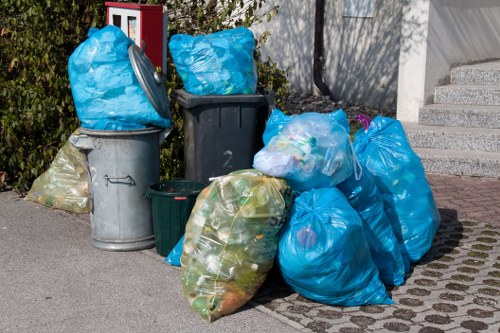
Waste removal can cover a wide range of jobs. Some people need a one-off house clearance after moving home, while others want recurring rubbish collection from a business premises. The exact service will depend on the amount and type of waste, but most local customers in London are looking for help with the following:
- Household rubbish and general clutter
- Bulky items such as sofas, mattresses, wardrobes, tables, and chairs
- Garden waste, branches, hedge cuttings, and soil bags
- Kitchen, bathroom, and bedroom clearances
- Loft, cellar, garage, and shed clear-outs
- Office furniture, filing cabinets, IT equipment, and packaging
- Shop fittings, stockroom waste, and light commercial debris
- Builder’s waste, renovation debris, and mixed site rubbish
Some services include lifting and loading, while others may also handle sorting, separating recyclables, and sweeping the area afterward. It is worth checking whether the team will remove items from inside the property, from outside the front door, or from a rear access point. In London, those details matter. A flat above a parade of shops in Brixton may need a different plan from a ground-floor office in Greenwich.
Good waste removal is not just about speed; it is about leaving the property usable again. If the job involves a rental property, a shop refit, or an end-of-tenancy clean-up, having the rubbish fully removed can make the next stage much easier.
Types of customers we help across London

One of the reasons waste removal in London is in such demand is the variety of properties and customer needs across the city. A single service can support many different situations, from small domestic jobs to larger business clearances.
Homeowners and tenants often need help after decluttering, moving, or renovating. This could include old furniture, damaged appliances, broken bicycles, bagged rubbish, or items left behind by previous occupants. In flats and converted buildings, the challenge is often getting heavy waste out safely without disturbing neighbours or damaging walls and stairwells.
Landlords and letting agents regularly need clearance after a tenancy ends. Left-behind rubbish, broken furniture, mattresses, and general debris can delay a property from being prepared for the next occupant. A prompt collection can help reduce downtime and make handover smoother.
Commercial waste removal
Businesses often need fast, discreet, and flexible rubbish removal. Offices may need old desks and chairs removed during a fit-out. Shops may need packaging, shelving, and obsolete stock cleared after deliveries or refurbishments. Hospitality venues might need regular waste uplift during busy periods, especially when storage space is limited. For many businesses, the biggest benefit is reducing disruption while keeping the premises presentable and functional.
Builders, tradespeople, and developers also use waste removal when a skip is not practical or when small-to-medium loads need to be collected quickly. Mixed renovation waste, broken fixtures, timber, and plasterboard can build up fast, and having a dependable team on call can keep the site moving.
How the service works

A well-run rubbish clearance service should feel simple from start to finish. Customers usually want a clear process, minimal back-and-forth, and enough flexibility to handle London’s practical realities. Here is the typical flow:
- Share the details of the job — Explain what needs removing, where the items are located, and whether there are stairs, parking restrictions, or access concerns.
- Receive an estimate or quote — The team may base this on photos, a description, or an on-site assessment depending on the size and type of job.
- Agree a convenient time — Collection can often be arranged around work hours, tenant handovers, shop opening times, or building access rules.
- Items are removed — The crew loads the waste, handles the lifting, and works carefully through the property or access route.
- Final tidy-up — Once the items are gone, the area is left clear so you can continue with cleaning, decorating, or reopening the space.
For many customers, the most reassuring part is not having to arrange transport, lifting, or disposal themselves. That is especially useful if you are dealing with bulky or awkward items that will not fit in a car, or if you do not have time to make repeated trips to a disposal site.
In London, timing matters. Morning collections can help avoid busy traffic, while late-afternoon slots may suit commercial clearances that need to happen after customers leave. A local team can often suggest the most practical window for your area and property type.
What happens on the day
On the day of collection, it helps if the waste is accessible and any special instructions have been shared in advance. If the items are in a basement, loft, locked yard, or top-floor flat, the crew will need to know that before arriving so they can plan the right amount of time and labour.
What affects the cost of waste removal in London

Most customers want a straightforward, honest quote. While exact prices are not listed here, it is useful to understand the main factors that influence the cost of waste removal in London. This helps you compare services fairly and avoid surprises.
The main factors usually include:
- Volume of waste — How much needs to be removed, from a few items to a full clearance.
- Type of waste — General household waste, furniture, garden debris, electrical items, or construction material may each require different handling.
- Access conditions — Stairs, narrow hallways, no lift access, long carries, and parking distance can all affect labour and time.
- Weight — Dense materials such as soil, rubble, tiles, and plaster can be more demanding than light mixed rubbish.
- Urgency — Same-day or short-notice collections may require more flexible scheduling.
- Location within London — Central streets, controlled parking zones, and busy commercial districts may involve more planning.
Some jobs are quick and straightforward, while others take careful preparation. For example, a few black bags from a studio flat in Paddington will usually be different from a half-empty office in Canary Wharf or a post-refurbishment clear-out in Shepherd’s Bush. Clear information upfront leads to a more accurate quote and a smoother visit.
If you are comparing providers, ask what the quote includes, whether lifting and loading are covered, and whether there are any extra charges for difficult access or special waste types. That way, you can make a sensible decision based on the real requirements of the job.
Residential waste removal for London homes and flats
London homes come in many forms: terraced houses, maisonettes, purpose-built flats, mansion blocks, converted townhouses, new-build apartments, and older properties with unusual layouts. Each type creates different waste clearance challenges. A family house in Ealing may have years of stored items in the loft and garden shed, while a compact flat in Stratford may simply need a sofa, mattress, and several bags removed after a move.
Domestic waste removal is especially useful during decluttering, downsizing, renovating, or preparing a property for sale or rent. It can also help when a relative’s home needs clearing, when storage has become unmanageable, or when bulky items need to be removed quickly after a delivery replacement. Having a team handle the heavy lifting can make the whole process far less overwhelming.
Many household customers also appreciate the discretion and care a local provider brings. A good team will work without unnecessary fuss, protect surfaces where needed, and move items with attention to stairwells, entrances, and shared spaces. That is important in apartment blocks and estates where neighbours, concierge staff, or building management may need to be considered.
Common household items collected
- Wardrobes, beds, mattresses, and bedside units
- Sofas, armchairs, coffee tables, and dining sets
- Fridges, freezers, washing machines, and small appliances
- Books, boxes, bagged rubbish, and loft contents
- Garden waste, fence panels, plant pots, and broken outdoor furniture
Commercial and office waste removal
Businesses in London often need waste removed quickly and without drama. Space is valuable, and clutter can make a workplace feel untidy or inefficient. Offices may need old desks removed during a redesign. Retail units may need stockroom waste cleared before trading starts. Hospitality venues may need broken seating, packaging, and general rubbish taken away outside public hours. In every case, reliability and flexibility matter.
Commercial waste removal should support your schedule, not interrupt it. A provider familiar with London will know how to work around loading bays, shared service entrances, busy high streets, and restricted access times. This can be especially helpful in central locations and mixed-use buildings where there are rules about deliveries and collections.
For landlords, facilities teams, and managers, one of the most useful aspects of a local service is consistency. If you regularly need rubbish cleared after fit-outs, office moves, or maintenance work, it helps to use a team that understands the property and can respond efficiently when needed.
Typical commercial jobs
- Office clear-outs and furniture removal
- Shop refits and retail waste collection
- Restaurant and café clearances
- Warehouse and stockroom rubbish removal
- End-of-lease clearances for business premises
Areas covered across London
Waste removal needs can come from almost anywhere in the capital, from busy inner-city streets to quieter residential roads and business parks. A local team is useful because London is not one uniform area; the logistics are different from borough to borough and even street to street. Common service areas may include central, north, south, east, and west London, along with surrounding neighbourhoods and nearby districts.
Customers often request collection from places such as Camden, Islington, Hackney, Tower Hamlets, Southwark, Lambeth, Westminster, Kensington and Chelsea, Hammersmith and Fulham, Brent, Ealing, Hounslow, Lewisham, Greenwich, Waltham Forest, Redbridge, Newham, Barnet, Richmond, and Croydon. However, each job should always be checked against the actual access, location, and type of waste involved.
It also matters that the crew can handle the practical differences between areas. A collection in a busy high street location near Oxford Street is not the same as a garden clearance in suburban Bromley or a trade waste pickup near Tottenham. Local knowledge can save valuable time and help keep the service efficient.
Why local coverage matters
When a waste team operates across London, they are more likely to understand local parking pressure, loading restrictions, and the best times to schedule collections. That can mean fewer delays and a more accurate estimate of how long the job will take. It also makes it easier to arrange repeat collections for commercial customers or property managers who need ongoing support.
How to prepare for a waste removal visit
Preparing for a rubbish collection does not need to take long, but a few simple steps can make the job quicker and more efficient. If you are planning waste removal in London, especially in a flat or busy commercial area, the following checklist is worth using:
- Separate the items you want removed from anything you are keeping.
- Make sure the crew can access the waste area safely.
- Let the team know about stairs, lifts, locked gates, or parking restrictions.
- Highlight any items that need extra care, such as fragile furniture or heavy appliances.
- Check whether anything must stay behind, especially in shared spaces or managed buildings.
- If possible, take a few photos to help confirm the load size and access conditions.
If the property has limited loading space or strict access times, mention that early. This is common in apartment blocks, business estates, and central London streets. A team that knows what to expect can arrive better prepared and avoid unnecessary delays.
Good preparation does not mean doing the hard work yourself. The purpose is simply to make the collection quicker, safer, and more efficient once the team arrives.
What to look for in a waste removal company
Choosing a waste removal company in London is about more than just availability. You want a service that is suitable for your property, responsive to your needs, and clear about how the job will be handled. Start by checking whether the provider is comfortable with the type of waste you have, whether the team can access your location properly, and whether the quote is based on the real amount of work involved.
It is also sensible to choose a company that can explain how different items are handled. For example, mixed household rubbish may be different from renovation debris or electrical waste. A professional team should be able to tell you what is included and flag anything that requires special attention.
For many local customers, trust comes down to practical details: clear communication, punctual arrival, careful lifting, and a clean finish. Those details matter whether the job is a one-bedroom flat clearance in Battersea or a commercial rubbish collection in Shoreditch.
Questions worth asking before booking
- Is the service suitable for flats, houses, offices, or trade waste?
- Can the team handle awkward access or restricted parking?
- What information is needed to provide an accurate quote?
- Does the service include lifting, loading, and clean-up?
- Can the collection be arranged around my schedule?
Frequently asked questions
Can waste removal handle large or bulky items?
Yes. Bulky items are one of the most common reasons people request rubbish clearance. Sofas, wardrobes, mattresses, tables, and appliances can usually be removed as part of a standard clearance, provided access is suitable and the items are described in advance.
Do you collect from flats and upper floors?
Yes, but it helps to explain the access in advance. Many London properties have stairs, lifts, shared entrances, or limited parking. A local team should be able to plan for that and bring the right amount of labour for the job.
Can I get waste removed after a house move or refurbishment?
Absolutely. These are some of the most common bookings. Move-related rubbish, broken furniture, packaging, old fixtures, and renovation debris can build up quickly, and a clearance service can help restore order fast.
Is commercial waste removal suitable for offices and shops?
Yes. Offices, shops, cafes, salons, and other business premises often need collections before, during, or after refurbishments, relocations, or routine clear-outs. Flexibility and discreet handling are often important in these settings.
How much notice do I need to give?
That depends on the size of the job and current availability. Some smaller clearances may be possible at short notice, while larger or more complicated jobs are best arranged in advance so the team can plan around access and timing.
Why customers choose a local London waste removal team
There are many reasons people prefer a local team rather than trying to manage waste themselves. The first is convenience. You do not need to hire a vehicle, recruit helpers, or spend hours making disposal trips. The second is practicality. London traffic, parking rules, and property access can make self-clearance far more difficult than expected. The third is time-saving. A professional team can often complete in a single visit what might take a resident or business several hours or even a whole day.
A local company is also more likely to understand the common property types and neighbourhood conditions across London. That means the job is less likely to be delayed by avoidable surprises. For many customers, that peace of mind is worth a great deal, especially when the clearance is linked to a move, sale, tenancy change, or business deadline.
If you want waste removal that feels straightforward, polite, and efficient, it makes sense to work with a team that regularly handles London properties and can adapt to the realities of the city.
When to request a quote
You should request a quote as soon as you know the type and rough volume of waste you need removed. This is especially helpful if your job involves heavy items, multiple rooms, a deadline, or tricky access. The more detail you can provide, the easier it is to receive a suitable estimate and schedule a practical collection time.
Good times to enquire include:
- Before a tenancy ends
- Before or after a renovation
- During a move-out or move-in
- After office or shop refits
- When clutter has built up and needs a reset
Contact us today if you are planning a clearance and want a local service that understands London access, timing, and property types. Whether you need a small domestic collection or a larger commercial rubbish removal, the right team can help you move forward with less hassle.
Final thoughts on waste removal in London
Waste removal in London works best when it is built around the realities of the city: busy streets, limited parking, mixed property types, and tight schedules. The right service should be flexible enough for a flat in Clapham, a house in Finchley, a shop in Chelsea, or an office near the City. It should also be practical, respectful, and clear about what is included.
Whether you need one bulky item taken away or a full property cleared, a local team can make the process more efficient and less stressful. If you are dealing with rubbish, clutter, or unwanted items and want the space back quickly, request a free quote and arrange a collection that fits your needs.
Book your service now and take the first step toward a cleaner, clearer property in London.