Property Clearance in London
If you need Property Clearance in London, you are likely dealing with more than just a pile of unwanted items. You may be preparing a flat for new tenants, clearing a house after a move, dealing with an estate, or emptying a commercial unit that needs to be handed back quickly. In a city as busy and varied as London, a proper clearance service can save time, reduce stress, and help you deal with access, parking, and disposal in a sensible way.
Local customers often want a service that is straightforward, respectful, and flexible. Whether the property is in a period terrace in Islington, a mansion block in Kensington, a warehouse conversion in Hackney, or a shop unit in Southwark, the needs can be very different. A reliable local team understands that every property comes with its own layout, time pressure, and access challenges.
This page explains what a property clearance service usually includes, how the process works, what affects pricing, and why many London customers prefer working with a team that knows the city well. If you are ready to clear a property and want a practical, no-fuss solution, request a free quote or book your service now.
Why Property Clearance Matters in London

London properties can fill up quickly. A home may have years of accumulated furniture, appliances, paperwork, clothing, and general household items. A business unit may contain shelving, office desks, filing cabinets, stock, fixtures, or old equipment. When a property needs to be emptied, the work can become physically demanding and time-consuming very quickly.
There are also practical local issues. Parking restrictions, controlled zones, basement access, narrow staircases, lift limitations, and busy roads can make DIY clearance difficult. In central areas such as Westminster, Camden, or the City, loading items safely and efficiently often requires planning. In outer boroughs and suburban parts of London, driveway access or shared entrances may also need careful coordination with neighbours or building management.
Property clearance in London is not just about removing items. It is about doing the job in a way that respects the property, the people involved, and the local rules around waste handling and disposal. A good service can help reduce disruption and make the property ready for its next use, whether that is sale, letting, refurbishment, or handover.
Types of Property Clearance We Help With
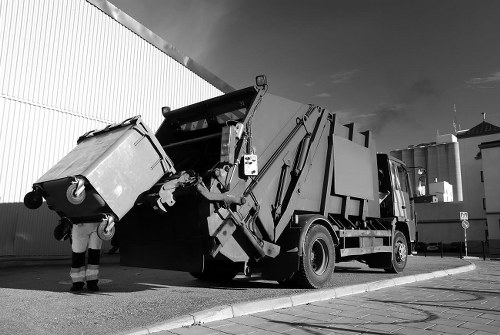
Property clearance needs can vary widely across London, and many customers are looking for help with more than one type of property. A local team should be able to adapt to different layouts, item volumes, and timeframes.
Common requests include:
- House clearances for family homes, terraces, semi-detached properties, and larger residences
- Flat clearances for apartments, ex-local authority flats, mansion blocks, and converted buildings
- Estate clearances where a property must be cleared with care and sensitivity
- Office clearances for desks, chairs, filing, IT equipment, and general workspace items
- Shop and retail clearances for fixtures, shelving, stock, and back-of-house contents
- Landlord clearance when a tenancy has ended and the property needs to be made ready again
- Hoarding-related clearance where the volume of items is substantial and the process needs patience and structure
- Garage, loft, basement, and storage unit clearance for space that has built up over time
Each type of property brings different challenges. A top-floor flat with no lift in Clapham is not the same as a ground-floor office in Shoreditch, and a probate property in Richmond may need a very different approach from a student let in Stratford. That is why local experience matters.
What a Professional Clearance Service Usually Includes

When customers ask what is included in a professional clearance, the answer usually depends on the property and the amount of work required. Still, most services aim to make the process simple from start to finish.
A typical service may include:
- Initial discussion about the property, access, and the items that need removing
- Visit or assessment where needed to understand the scale of the clearance
- Clear plan for collection, loading, and removal
- Removal of furniture, appliances, and general contents
- Separation of items for reuse, recycling, or appropriate disposal where possible
- Sweeping or basic tidy-up once the property has been cleared
- Flexible timing to fit around landlords, executors, solicitors, agents, tenants, or business owners
Some properties only need a partial clearance, such as removing bulky items from a flat in Greenwich or clearing old office furniture in Canary Wharf. Others may need a full emptying of every room, cupboard, and storage area. The right service should be able to tailor the work to your exact needs rather than forcing a one-size-fits-all approach.
Important note: if there are items you want to keep, it helps to separate them in advance or point them out clearly before the clearance begins. This reduces the risk of confusion and keeps the job moving efficiently.
How the Property Clearance Process Works

Customers often want to know what happens on the day. A clear process makes the whole experience easier, especially when there is pressure from a moving date, a rental deadline, or an estate schedule. In London, timing matters because buildings may have loading restrictions, neighbours nearby, or limited access windows.
Here is how the process commonly works:
- Step 1: Make an enquiry and explain the type of property, location, and items involved
- Step 2: Discuss access such as stairs, lifts, parking, entry codes, or loading points
- Step 3: Arrange a suitable time that fits your schedule and the building’s access rules
- Step 4: Clearance day where the team removes items efficiently and safely
- Step 5: Final check to make sure agreed areas have been cleared
- Step 6: Leave the property tidy with basic clean-down or sweep-up as part of the service
For many London customers, speed and reliability are just as important as the removal itself. If you are dealing with a probate property in Hammersmith, a tenancy change in Lewisham, or a business closure in Ealing, you may need the work done within a tight window. A local team can often respond faster and plan around the realities of the city.
Why Choose a Local London Property Clearance Team
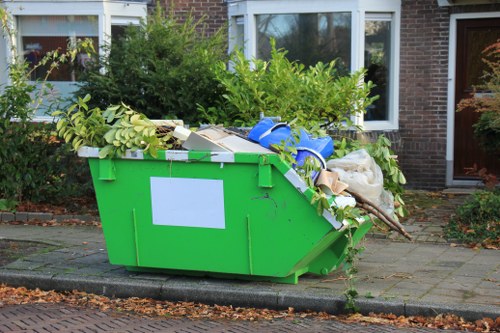
There are good reasons local customers look for a team that already knows London well. The city is large, busy, and full of different property types. A local company is more likely to understand the practical issues that affect clearance jobs, from traffic-heavy routes to borough-specific access patterns.
Reasons a local service can help include:
- Better understanding of access in terraced streets, estates, mews houses, and converted buildings
- Awareness of parking and loading challenges in central and inner London locations
- Faster response times for urgent clearances or last-minute changes
- Experience with mixed property types including flats, townhouses, offices, shops, and studios
- Practical planning for multi-storey buildings, narrow stairwells, and shared entrances
- Local knowledge of borough expectations around waste handling and safe removal
Choosing a London-based service also means you are more likely to get realistic timing and communication. If a van needs to park a certain distance away, or if a building has a narrow time slot for loading, a local team can work around that. This makes the process smoother for homeowners, landlords, estate managers, solicitors, and commercial clients alike.
Residential Property Clearance for London Homes and Flats
Many enquiries come from people clearing a home after a move, a family change, or a long period of accumulation. London homes can contain a surprising amount of furniture and belongings, especially in properties where storage has been used for years. Loft spaces, under-stair cupboards, sheds, and cellars often become full without anyone noticing how much has built up.
Residential clearance might be needed when:
- A homeowner is downsizing and needs a large amount of furniture removed
- A tenancy has ended and the property must be emptied quickly
- A family member has passed away and the property needs to be cleared with care
- A renovation is due and rooms must be emptied before work begins
- A long-term clutter problem has made rooms difficult to use properly
For flats in London, access issues are often the biggest concern. A third-floor walk-up in Peckham, a block with a small lift in Fulham, or a purpose-built apartment in Woolwich may all require careful lifting and planning. A professional team reduces the strain on you and helps protect walls, floors, and communal areas during removal.
Commercial Property Clearance for London Businesses
Commercial clearances require a different mindset because business owners often need to minimise disruption and meet deadlines. Office closures, retail refits, restaurant changes, and unit handbacks all tend to involve time pressure. In London, where rent and occupancy costs can be significant, delays are rarely welcome.
Commercial customers may need help with:
- Office furniture removal
- IT and electrical item clearance
- Shop fittings and shelving removal
- Café, bar, or restaurant contents clearance
- Archive and paperwork removal
- Warehouse or storage clean-outs
- End-of-lease emptying before inspection or refurbishment
Business premises in areas such as Holborn, Southbank, Canary Wharf, Battersea, and Stratford can have strict access rules, service entrances, or timed loading bays. A local clearance service can work around those practical demands and keep the job moving efficiently. If you are managing a closure or refit, contact us today to discuss your timeframe and property type.
Office and Retail Clearance Considerations
Commercial properties often include items that are bulky, awkward, or time-sensitive to remove. Filing cabinets may need emptying, desks may need disassembly, and shelves may be fixed in place. Retail spaces may contain stock, promotional fixtures, stockroom items, and display units that need careful handling.
It also helps to plan for building management or landlord requirements. Many London commercial sites require advance notice for access, use of lifts, or disposal routes through common areas. A team familiar with business clearances can handle these details with less disruption to your operation.
Property Types Across London
London is not one uniform market. A clearance in North London can feel very different from one in South London or the Docklands. Understanding the local property landscape helps customers choose a service that is prepared for the realities of the job.
Examples of property types commonly cleared across the capital include:
- Victorian and Edwardian houses with lofts, basements, and rear extensions
- Modern apartment blocks with lifts, concierge desks, and shared corridors
- Ex-local authority flats where access may involve stairwells and compact layouts
- Mews properties and townhouses where parking and access can be limited
- Converted buildings with unusual room sizes or shared entrance routes
- Shops, salons, studios, and offices in high-footfall commercial areas
Whether your property is in Battersea, Crouch End, Walthamstow, Brixton, Kensington, or Croydon, the practical considerations are often similar: safe removal, careful access, and a tidy finish. The difference is in how each job is planned.
Pricing Factors: What Affects the Cost of Clearance?
Customers often want to understand what influences the cost of a property clearance. While exact prices vary, there are several common factors that affect the quote. It is helpful to know this in advance so you can compare services more confidently and avoid surprises.
Typical pricing factors include:
- Size of the property and the number of rooms or areas involved
- Volume and type of items such as furniture, appliances, or mixed contents
- Accessibility including stairs, lifts, narrow halls, and parking distance
- Time required for dismantling, loading, and removal
- Special handling needs for fragile, heavy, or awkward items
- Urgency or scheduling constraints if the job needs to be completed quickly
Some clearances are straightforward, while others take more planning. A ground-floor flat with nearby parking in Lewisham will usually be simpler than a top-floor Victorian conversion in Highgate with no lift and limited road access. A proper quote should reflect the actual work involved, not just the postcode.
When you request a free quote, it helps to describe the property clearly, mention any bulky items, and note access details. This allows the team to provide a more accurate estimate and helps avoid unnecessary delays on the day.
How to Prepare for a Property Clearance
A little preparation can make the service quicker and more efficient. You do not need to do all the hard work yourself, but a few simple steps can help the clearance go smoothly.
Preparation checklist:
- Separate items you want to keep and store them in one area if possible
- Identify anything sensitive such as documents, jewellery, keys, or personal records
- Tell the team about access details like entry codes, fobs, parking restrictions, or loading bays
- Check with building management or neighbours if communal access needs notice
- Make sure the team knows about hazards such as broken glass, damp areas, or heavy items
- Leave a clear path to doors, hallways, and main item areas where possible
If the property is in a managed block or on a busy street in London, access planning is especially important. In some cases, a service lift or specific arrival window may be needed. The more clearly these points are explained beforehand, the easier the day will be for everyone involved.
What Happens to the Items Removed?
Many customers care about where items go after a clearance. That is a fair question, especially when there are reusable pieces of furniture or mixed contents that should not simply be thrown away. A responsible service aims to handle items carefully and make sensible disposal choices.
Depending on the condition and type of items, they may be:
- Reused if suitable and in acceptable condition
- Recycled where possible
- Sorted for appropriate disposal through the correct channels
- Handled separately if they require special care
Customers often appreciate a team that can explain the removal process clearly. It helps build confidence when clearing homes, estates, or workplaces. A professional approach means more than simply loading everything into a van; it means handling the job responsibly and leaving the property in a usable state.
Useful for landlords, agents, executors, and homeowners
Whether you are managing a rental property in Kilburn, arranging an estate clearance in Barnet, or preparing a home for sale in Dulwich, the aim is the same: make the property ready for the next step with as little stress as possible.
Areas Covered Across London
A strong local clearance service should cover a broad part of the capital, including central, north, south, east, and west London. Customers often need help in a mix of residential streets, high-rise developments, business districts, and suburban roads.
Areas commonly served may include:
- Central London areas such as Westminster, Camden, Islington, and the City
- North London areas such as Enfield, Barnet, Haringey, and Hackney
- South London areas such as Lambeth, Southwark, Lewisham, and Wandsworth
- East London areas such as Tower Hamlets, Newham, and Greenwich
- West London areas such as Hammersmith and Fulham, Ealing, Brent, and Kensington and Chelsea
That said, every property is different. If you are just outside the centre, or on the edge of London boroughs, it is still worth asking. The important thing is getting a service that understands the route, the parking, and the type of building involved.
Local relevance matters
London streets can be tight, busy, and unpredictable. A service that works locally every day is more likely to arrive prepared for stair-only access, loading restrictions, and the realities of moving items through shared spaces. That experience can make a big difference when your deadline is close.
Frequently Asked Questions
How long does a property clearance take?
It depends on the size of the property, the amount of contents, and the access. A smaller flat may take only a few hours, while a full house or commercial unit can take longer. Buildings with difficult access or many bulky items may also extend the timeframe.
Do I need to be at the property during the clearance?
Not always. Some customers prefer to be present, especially for estate clearances or when there are specific items to keep. Others arrange access in advance and return once the job is complete. This can be discussed when you make the booking.
Can you clear just one room or part of a property?
Yes. Partial clearances are common in London, especially when only a loft, garage, office, or storage room needs attention. You do not always need a full-property service.
What if the property has stairs or no lift?
That is very common in London. A professional clearance team should be prepared for stair access, basement rooms, and buildings without lifts. It is important to mention this early so the job can be planned properly.
Can you help with urgent clearances?
Many customers need quick turnaround because of tenancy deadlines, probate arrangements, or commercial handovers. Availability can vary, so it is best to enquire as soon as possible if time is tight.
Will the property be left tidy?
Most customers expect the cleared areas to be left neat and manageable. A basic tidy-up or sweep is often part of the service, though the exact level of finish can depend on the scope of the job and what has been agreed in advance.
Signs You May Need Property Clearance Now
Sometimes customers are unsure whether they need a full clearance or just a simple removal service. If any of the following apply, it may be time to arrange help:
- The property is difficult to walk through because of excess items
- You are preparing for sale, letting, renovation, or handover
- You need to empty a home after a bereavement or family change
- Furniture or appliances are too large to move safely alone
- A business premises must be cleared before the end of a lease
- Storage spaces like lofts, basements, or garages are overflowing
When a property starts to feel unmanageable, professional help can make a real difference. It is not just about removing clutter; it is about restoring order and getting the space ready for its next purpose.
Book your service now if you want a sensible, practical way to clear a property anywhere across London.
Why Customers Value a Sensible, Local Approach
People looking for property clearance in London usually want more than a collection service. They want a team that communicates clearly, turns up prepared, respects the property, and understands the pressures of city living. That is especially true when the job involves a family home, a rental deadline, or a business handover.
A sensible local approach means:
- Clear communication before the visit
- Practical advice about access and timing
- Careful handling of belongings and surrounding areas
- Efficient work without unnecessary disruption
- A service tailored to the type of property and contents involved
Whether you are in North London, South London, East London, West London, or central boroughs, choosing a team that works locally every day can make the process much simpler. If you have questions about your property type, access, or the amount of clearance needed, contact us today and ask for a free quote.
When the property is ready to be cleared, the right team can help you move forward with confidence.