Office Clearance in London
If you are planning an office clearance in London, you may already know that it is rarely just a matter of moving a few desks and emptying a cupboard. In a busy city with mixed-use buildings, tight access, parking restrictions, shared entrances, lift bookings, and strict building management rules, clearing an office takes planning, coordination, and a practical understanding of how London properties work. Whether you are relocating, downsizing, refurbishing, closing a workspace, or simply replacing old furniture and equipment, a professional clearance service can save time, reduce disruption, and help you keep the process under control.
London businesses operate in all kinds of spaces: glass-fronted offices in the City, shared workspaces in Shoreditch, consulting rooms in Kensington, creative studios in Camden, managed suites in Canary Wharf, and converted buildings across South London, West London, and beyond. Each setting has different access conditions and different expectations for security, timing, and waste handling. A local team that understands those realities can make a noticeable difference from the first enquiry to the final sweep-through.
Book your service now if you want a straightforward, organised clearance handled by people who know London buildings, traffic patterns, and the practical pressures of business premises. From single rooms to full-floor clearances, the right service should be flexible enough to fit your schedule and thorough enough to leave the space ready for its next stage.
Why office clearance matters for London businesses
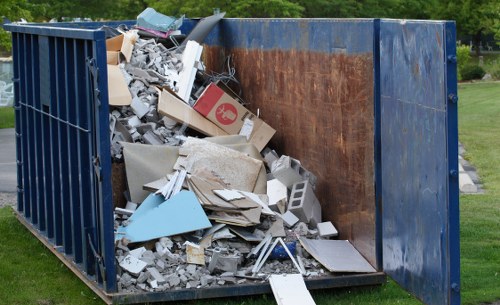
An office clearance is often needed at a moment when time is tight and there are several priorities competing at once. You may need to vacate a lease by a deadline, prepare for a fit-out, return a building to a landlord in good order, or create a cleaner, safer environment for staff and contractors. In central and inner London especially, delays can be expensive, because building access is often limited to certain hours and loading bays may be shared with other tenants.
For many businesses, the challenge is not only removing items, but removing them in a way that keeps the workplace safe, tidy, and compliant with building rules. Office furniture, IT equipment, filing cabinets, shelving, meeting room tables, reception units, and archived paperwork all need to be handled carefully. A reputable office clearance London service should be able to work methodically, protect the building, and manage the flow of items without turning the workspace into a mess.
There is also a strong environmental side to the work. Many businesses now want to reduce waste, separate reusable items, and avoid sending everything straight to disposal. A proper clearance should consider reuse, recycling, and responsible removal where possible. For local customers, this is especially useful because it means the whole job can be handled in one go, rather than piecing together furniture removal, waste disposal, and IT clearance separately.
Who uses office clearance services in London?

Office clearance services are used by a wide range of customers across the capital. Some are small firms moving out of a compact office near a station; others are large organisations clearing entire floors in commercial districts. The service can be adapted to the size and type of premises, which is one reason it is so useful in a city with such varied property stock.
Common customers include:
- Start-ups and SMEs clearing out after a move, rebrand, or change of lease.
- Corporate offices needing phased clearance during refurbishment or downsizing.
- Landlords and managing agents preparing a suite for new tenants.
- Facilities teams removing surplus furniture, broken items, and obsolete equipment.
- Professional practices such as accountants, solicitors, and consultants handling archive-heavy clearances.
- Co-working spaces needing regular clearance between occupiers or during reconfiguration.
In places like Holborn, Liverpool Street, Victoria, Paddington, and London Bridge, customers often need work done outside peak hours or with minimal disturbance to neighbours and other tenants. In residential-commercial buildings across areas like Clapham, Islington, Hackney, Battersea, and Greenwich, access can be just as important as speed. A local team that is used to these conditions can plan around lift reservations, concierge procedures, delivery schedules, and loading restrictions far more effectively than a one-size-fits-all approach.
What is included in an office clearance?

A good clearance service should be clear about what is being removed and how the job will be managed. Every office is different, but most customers want a service that is organised, respectful of the property, and capable of handling a wide range of items in one visit where possible.
Typical items removed during commercial office clearance in London include desks, chairs, filing cabinets, storage units, partitions, shelving, reception furniture, whiteboards, printers, monitors, telephones, cables, and general office clutter. Some clearances also involve archived boxes, stationery, kitchen items, and miscellaneous stock stored in cupboards, basements, or storerooms. If you are moving out, it is often useful to clear not only the main work area but also meeting rooms, breakout areas, server rooms, and storage spaces.
Depending on the job, the service may also include sorting, loading, separating items for reuse or recycling, and leaving the premises in a tidy condition. In some cases, customers need help clearing access routes, stairwells, or basement storage before another contractor can begin work. A well-managed clearance should be able to work around these practical requirements without causing unnecessary disruption.
Common items that may be handled
- Office desks and workstation furniture
- Task chairs, meeting chairs, and reception seating
- Cabinets, pedestals, shelving, and storage units
- Computers, monitors, printers, and peripherals
- Boxes of paperwork, files, and archived records
- Kitchen and breakout furniture
- Miscellaneous fixtures and surplus office contents
Important: if you have specialist items, sensitive materials, or equipment that requires careful handling, mention this early when requesting a quote. That allows the team to plan the right vehicle, labour, and collection method.
How the office clearance process works

The process should feel simple from the customer’s point of view. A reliable local service will usually begin by understanding the size of the premises, the items involved, the access conditions, and the deadline. In London, those details matter because a job in a basement office off a narrow mews will need a different plan from a clearance in a managed tower with loading dock rules.
Once the requirements are clear, the next step is scheduling. Many businesses want early morning, evening, or weekend clearance to avoid interrupting the working day. If your office is in a busy area such as the City, South Bank, Canary Wharf, Soho, Mayfair, or Westminster, timing can be just as important as manpower. A local team should factor in traffic, parking permissions, and building access windows so the work starts smoothly.
On the day, the team should arrive ready to assess the site, confirm what is being removed, and begin loading in an organised way. Good clearance work is not just about lifting items quickly; it is about keeping pathways clear, protecting walls and floors where needed, and making sure nothing is left behind by mistake. If the premises require a final sweep or a more detailed clear-out of cupboards and storage areas, that should be agreed in advance.
A typical sequence may include:
- Initial assessment and discussion of the scope
- Booking a suitable date and access window
- Arrival and confirmation of items to be removed
- Careful loading and separation of items where appropriate
- Final check of rooms, storage areas, and access routes
- Completion of the clearance and handover of the space
If you need a phased clearance, the service can often be arranged in stages, which is especially useful for larger offices or shared buildings. This approach allows businesses to keep operating while surplus furniture or equipment is removed gradually rather than all at once.
Access, parking, and building rules in London

One of the main reasons customers look for a local office clearance in London team is the practical knowledge that comes with working in the capital every day. Parking restrictions, congestion, permit areas, loading bays, and narrow streets can all affect how quickly a clearance can be completed. If you are based in a location such as Westminster, the West End, the Square Mile, or around major rail hubs, these issues are not minor details; they are central to the plan.
Many commercial buildings also have their own requirements. Some need prior notice for contractor access, some require lift bookings, and others have specific rules on moving items through common areas. In multi-tenant buildings, it is important to avoid blocking entrances, reception desks, or shared corridors. A team used to London premises should be prepared for concierge sign-in procedures, delivery-time restrictions, and narrow or restricted access routes.
This is particularly relevant in converted properties, period buildings, and mixed-use developments, where stairwells may be tight and lifts may be small or unavailable. In areas like Notting Hill, Marylebone, Clerkenwell, Shoreditch, and parts of Southwark, many offices occupy non-standard buildings. A local team can plan around these conditions and bring the right equipment, labour, and vehicles to keep the job moving.
Why choose a local office clearance company?
Choosing a local company for office clearance often makes the process easier from the very start. A London-based team is more likely to understand the realities of the city: busy roads, building regulations, time windows, and the mix of old and new premises found across different boroughs. That local knowledge can save time and reduce stress on the day.
Here are some practical reasons local customers prefer a London service:
- Faster coordination around access times and site requirements.
- Better understanding of London buildings, from tower blocks to period conversions.
- More realistic scheduling around traffic and parking conditions.
- Flexible support for offices, studios, shared spaces, and commercial units.
- Reduced disruption thanks to efficient route planning and on-site organisation.
- Local familiarity with borough rules and common landlord expectations.
For customers, this means less back-and-forth and a smoother overall experience. If you need the space cleared quickly before handover, refurbishment, or lease-end inspection, local experience becomes even more valuable. It is not simply about removing items; it is about making the whole process manageable in a real London setting.
Suitable for both commercial and residential-style office spaces
Not every office sits in a big corporate tower. Many London businesses work from converted flats, townhouse offices, small studios above shops, or home-office-style workspaces with commercial use. These can be more awkward to clear because access is tighter and neighbours may need to be considered. A flexible clearance team should be able to work carefully in these settings too.
Preparing for your clearance
Good preparation can make the day faster and help the team work more efficiently. You do not need to do everything yourself, but a little organisation before the appointment can reduce confusion and prevent mistakes. This is especially useful if multiple departments, suppliers, or contractors are involved.
Preparation checklist
- Identify what must be removed and what must stay.
- Label any items that are to be reused, relocated, or retained.
- Separate personal belongings from office furniture and waste.
- Back up or securely remove important data from IT equipment before collection.
- Notify building management if access permissions or lift bookings are needed.
- Reserve parking or loading access where possible.
- Clear pathways to desks, storage rooms, and exits if you can do so safely.
- Let the team know about heavy, awkward, or sensitive items in advance.
If you have archived files, confidential paperwork, or specialist electronics, it is wise to plan those items separately. Some businesses choose to sort records before the clearance so that confidential material is dealt with properly and any reusable equipment can be retained or redistributed internally. The clearer the instructions, the easier it is to avoid delays on site.
Tip: if your office includes a basement storage room, roof space, or lockable cupboard areas, mention them early. In London properties, these secondary spaces are often where the most forgotten items are stored.
What affects the cost of office clearance?
People often want a quote as early as possible, but the price of an office clearance depends on several practical factors. A trustworthy company will usually want enough information to give an accurate estimate rather than offering a guess that changes later. The more detail you can provide, the more useful the quote is likely to be.
Common pricing factors include:
- The amount and type of furniture or equipment to be removed.
- Access conditions, such as stairs, lifts, narrow corridors, or basement rooms.
- Parking availability and loading restrictions.
- The urgency of the job and preferred time of day.
- Whether the work is a partial clearance, full-floor clearance, or multi-site project.
- Any specialist handling requirements for fragile, bulky, or sensitive items.
- Whether sorting, dismantling, or additional labour is needed.
For London customers, access is often one of the biggest cost variables. A straightforward clearance in a ground-floor business unit may be simpler than the same volume of furniture in a third-floor office with no lift and limited street access. That is why it helps to explain the layout honestly when requesting a free quote. Clear details allow the service to be planned more accurately and reduce surprises later.
Request a free quote if you want a realistic estimate based on your premises, items, and timing needs. A good provider should be happy to discuss the scope before you commit.
Types of office clearance in London
Office clearance is not always a single, one-off job. Depending on the property and the business situation, the service can be adapted to different needs. This flexibility is one reason customers across London continue to rely on local clearance teams.
Common clearance types include:
- Full office clearance for vacated or closing premises.
- Partial clearance for one room, one department, or a selected area.
- Furniture-only removal for desks, chairs, cabinets, and shelving.
- IT and equipment clearance for old monitors, printers, and peripherals.
- End-of-lease clearance when preparing for return of the space.
- Refurbishment clearance before fit-out or redecoration work.
- Regular removal support for ongoing downsizing or reorganisation.
In central districts and busy business zones, customers often need clearances completed outside standard office hours. In other parts of London, access is more about the building layout or local parking than the time of day. A good service should be able to adjust to both scenarios and keep the process practical for your team.
When partial clearance makes sense
Partial clearance is often the right choice when a business is staying in the building but changing the layout, reducing its footprint, or replacing older furniture. It can also be helpful when one floor needs to be emptied before decoration while another floor remains in use.
Areas covered across London
A local office clearance service should be able to cover a wide range of boroughs and neighbourhoods across the capital. The exact route and access setup will vary, but many customers need support in both central and outer areas, often on short notice.
Typical areas include:
- Central London locations such as the City, Westminster, Holborn, and the West End
- North London areas including Islington, Camden, Finsbury Park, and Haringey
- East London districts such as Shoreditch, Hackney, Stratford, Canary Wharf, and Whitechapel
- South London locations including Southwark, Lambeth, Clapham, Brixton, Greenwich, and Wandsworth
- West London areas such as Kensington, Chelsea, Hammersmith, Fulham, Ealing, and Richmond
Many businesses operate from addresses near rail stations, business parks, shared office buildings, or converted commercial properties, so familiarity with different borough layouts is important. This is especially true where parking is controlled, streets are narrow, or access is shared with residents and other businesses. London is varied, and the clearance plan should reflect that.
What makes a good office clearance experience?
The best clearance experience feels organised, calm, and predictable. You should know what is being removed, when the team will arrive, how access will be handled, and what will happen if there are changes on the day. Communication matters just as much as labour.
A good provider will usually be careful about the details that matter to businesses: keeping disruption low, showing respect for reception areas and common spaces, handling items methodically, and leaving the site in a presentable state. In London offices, where space is often at a premium, efficient handling can make a big difference to the overall experience.
It also helps if the service can adapt to different kinds of premises without making you manage the complications yourself. A small studio in Shoreditch, a professional suite in Marylebone, and a full-floor office near Bank each bring different challenges. The right team should be ready for those differences and able to plan accordingly.
Look for a service that is:
- Responsive to your timing needs
- Clear about the scope of work
- Experienced with London access conditions
- Flexible with partial or full clearances
- Organised from first enquiry through completion
Contact us today to discuss your office clearance requirements and get the process moving in a practical, no-fuss way.
Frequently asked questions
Below are some of the questions customers commonly ask when arranging office clearance in London. If your situation is unusual, it is always worth explaining the details before the job is booked.
How much notice do I need to give?
It depends on the size of the clearance and the level of access required. Smaller jobs may be arranged quickly, while larger office clearances or those in high-traffic London buildings may need more planning. If you have a fixed lease-end date or refurbishment start date, it is sensible to enquire as early as possible.
Can you clear offices in busy central areas?
Yes, but the plan may need to take account of restricted access, loading rules, and timings. Central London often requires more attention to parking and building procedures, so providing these details early helps the job run smoothly.
Do I need to dismantle furniture first?
Usually not. Many office clearance jobs involve removing furniture in its existing condition, although there are situations where partial dismantling helps with access. If there are large desks, conference tables, or fitted units, let the team know in advance.
What happens to old office items?
That depends on the items themselves and the handling arrangements agreed for the job. Many customers want reusable furniture separated where possible, while other items may be collected for responsible disposal. If you have a preference, mention it when you request your quote.
Can you help with confidential paperwork?
If your office contains files, records, or documents that need careful handling, make that clear from the start. Businesses often want to sort sensitive materials separately before clearance begins, so nothing important is moved by mistake.
Do you work with landlords and managing agents?
Yes, office clearance is often arranged by landlords, agents, and building managers as well as tenants. This can be especially useful when preparing commercial space for new occupiers or handling a unit after a tenant has left.
Can a clearance be done outside normal hours?
In many cases, yes. Early morning, evening, or weekend appointments can be useful in busy London buildings where daytime disruption must be kept low. Availability will depend on the job and access conditions.
If you have questions that are specific to your premises, the best next step is to request a free quote and explain the details. That way, you can get a practical response based on your actual situation rather than a generic answer.
Ready to arrange your office clearance?
When an office needs clearing, the sooner the job is properly planned, the easier it becomes. Whether you are in a compact workspace in Camden, a managed floor in Canary Wharf, a studio in Hackney, or a professional suite in Kensington, a local service can help you clear the space in a controlled and efficient way.
From access planning and parking considerations to furniture removal, storage room clear-outs, and end-of-lease preparation, the right team should make the task simpler rather than adding to the pressure. If you want the work handled professionally and with local knowledge of London buildings, boroughs, and access conditions, now is a good time to take the next step.
Contact us today to discuss your requirements, ask for a free quote, or book a convenient clearance time that fits your schedule. If you need a dependable, practical solution for an office clearance in London, help is available when you are ready.