Flat Clearance in London
When you need flat clearance in London, you usually need it done with care, speed, and as little disruption as possible. Flats in the capital come in all shapes and sizes, from compact studio apartments in Zone 1 to larger purpose-built blocks in outer boroughs, mansion flats, council estates, converted terraces, and modern developments with lifts, concierge desks, and parking restrictions. Whatever the property type, clearing a flat can be stressful when you are dealing with time limits, access issues, shared entrances, bulky furniture, or sensitive items that need sorting properly.
A local flat clearance service is designed to make that process easier. Whether you are preparing a property for sale, dealing with a tenancy end, helping a relative move, clearing an inherited flat, or simply reclaiming space, professional help can save time and reduce pressure. In a busy city like London, where loading bays are limited, staircases can be narrow, and parking can be difficult, having an experienced team on your side can make a real difference.
This page explains what a flat clearance service includes, how it works, what affects the price, and why local knowledge matters. If you are looking for a practical, reliable way to clear a flat in London, this is a good place to start. Contact us today to discuss your requirements or request a free quote when you are ready.
Flat Clearance Services for London Homes and Flats

Flat clearance is not the same as simply moving a few boxes. It often involves removing unwanted furniture, electrical items, bagged household contents, loose clutter, and sometimes larger items such as wardrobes, beds, sofas, dining tables, white goods, and office equipment. In some cases, a full clearance is needed after a tenancy ends, after a bereavement, before a refurbishment, or when a property is being prepared for handover.
London properties present a wide range of practical challenges. A flat on the fifth floor without a lift is very different from a ground-floor apartment with direct access. A converted building in Notting Hill, a new-build in Canary Wharf, and a small flat above a shop in Camden all require different planning. A skilled team will take these differences into account and work efficiently while respecting the building and neighbours.
For local customers, the main benefit is convenience. You do not need to organise skips, carry items down multiple flights of stairs, or spend days sorting and transporting everything yourself. A professional clearance team can manage the heavy lifting, loading, and removal so that the flat is left clear and ready for the next step.
Why Local Knowledge Matters in London

London is a city where logistics matter. Parking restrictions, controlled zones, narrow roads, busy high streets, and limited access times can all affect how a flat clearance is carried out. In areas such as Islington, Hackney, Westminster, Kensington, Southwark, and Wandsworth, it is common to encounter tight access, permit restrictions, and buildings with shared entrances or strict management rules. A local company understands these conditions and can plan around them.
Local experience also helps with timing. If you need the flat cleared before an end-of-tenancy inspection, property sale completion, probate valuation, or a handover to letting agents or landlords, timing is important. A team familiar with London schedules, traffic patterns, and borough-level access issues is better placed to complete the work efficiently and with less inconvenience.
There is also the matter of building etiquette. Many London flats are part of blocks with quiet hours, concierge procedures, service lifts, and communal hallways that must be protected. A professional flat clearance team will work carefully, avoid unnecessary disturbance, and aim to leave common areas tidy.
What Is Included in a Flat Clearance Service?
Every clearance job is different, but most customers want to know what is included before they book. A good flat clearance service should be clear about the scope of work and flexible enough to handle different types of property and contents.
Typical services may include the removal of furniture, appliances, boxes, general household items, loft or storage contents, and unwanted belongings left behind by tenants or previous occupants. Depending on the job, it may also include sorting items for reuse, separating recyclable materials, and careful handling of items that need to be retained by the client.
For many customers, the service also includes lifting and carrying from upstairs flats, basement flats, and buildings without lift access. In London, this matters more than people often expect. Even a modest one-bedroom flat can require significant labour if access is awkward or if the contents are heavy and awkward to move.
Common items removed during flat clearance

Below are examples of what is often cleared from London flats:
- Wardrobes, beds, mattresses, and bedside furniture
- Sofas, armchairs, coffee tables, and dining sets
- White goods such as fridges, freezers, washing machines, and cookers
- Boxes, bags, clothing, books, toys, and general household clutter
- Kitchen contents, small appliances, and crockery
- Office furniture, filing cabinets, and work-from-home equipment
- Storage-room contents and items stored in cupboards or loft spaces
- End-of-tenancy leftovers and abandoned belongings
Some jobs are straightforward and some need a bit more care. If a property contains fragile items, sentimental belongings, or contents that must be separated before removal, a professional team should be able to work methodically and follow your instructions.
How Flat Clearance in London Works
Most customers want a process that is simple and predictable. The aim is to remove stress rather than create more of it. While every job is slightly different, a typical flat clearance process usually follows a clear pattern.
- Initial enquiry – You explain what needs clearing, the property type, location, and any access issues.
- Assessment – The team may ask for photos, a description, or a viewing to understand the volume and complexity of the job.
- Quote – You receive a price based on the amount to be removed, access conditions, and any special requirements.
- Booking – A date and time are agreed, taking into account building access, parking, and your own schedule.
- Clearance day – The team arrives, removes the items, and loads them safely and efficiently.
- Final check – The property is checked to ensure the agreed areas have been cleared.
For many customers, especially landlords and estate agents, a fast turnaround is crucial. If a flat needs to be photographed, repaired, cleaned, or handed over quickly, a professional clearance can help keep the wider process moving.
It is also helpful for private homeowners and family members who are managing a property from a distance. If you are based outside London or simply do not have time to manage the job yourself, a local team can step in and handle the practical work.
Types of Customers We Help

Flat clearance services in London are used by many different people. Some need a one-off clear-out; others need regular support for property management or business reasons. Understanding the customer’s situation is important because the approach may need to be more careful, more discreet, or more time-sensitive.
Residential customers
Homeowners, tenants, family members, and people downsizing often need help clearing a flat after moving out, preparing for a sale, or reclaiming space that has become overcrowded. In London, where property sizes can be modest, it does not take long for a one-bed flat to feel full. A clearance service can help restore order and make the property usable again.
Landlords and letting agents
When tenants leave items behind, landlords may need the flat cleared quickly so that cleaning, repairs, and re-marketing can begin. Letting agents often need a dependable service that can work around checkout schedules, inventory reports, and handover deadlines. A prompt clearance can reduce delays and make the property ready for the next occupants.
Executors and families handling estates
Clearing a flat after a bereavement can be emotionally difficult as well as physically demanding. A careful, respectful approach is essential. Families often need help sorting contents, removing furniture, and dealing with the practical side of preparing the property for valuation, probate, sale, or letting.
Commercial customers
Some London flats are used partly for business, such as live-work spaces, home offices, short-term accommodation setups, or private rentals managed by property businesses. Commercial customers often value clear timing, efficient removal, and a professional approach that keeps disruption to a minimum.
What Makes a Good Flat Clearance Team?
Not all clearance jobs are identical, so choosing the right team matters. A reliable flat clearance company should be organised, careful, and transparent about what is included. It should also understand the practical realities of working in London rather than treating every job like a standard suburban house clearance.
Look for a team that can communicate clearly, arrive on time, and adjust to building rules or access restrictions. They should be able to manage stair-only access, lift bookings, loading restrictions, and any neighbour-sensitive issues without turning a simple job into a complicated one.
It also helps if the team is respectful with the property itself. Hallways, doorframes, communal areas, and flooring should be protected where necessary. In many blocks, especially older conversions and managed developments, avoiding damage is as important as removing the contents.
Preparation Checklist Before Your Flat Clearance
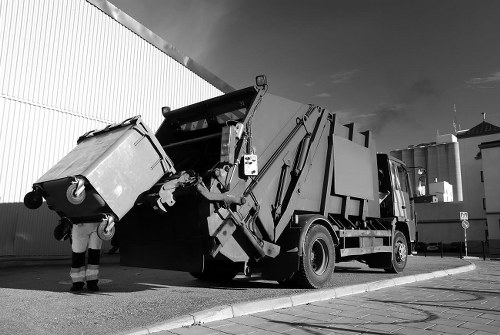
Good preparation makes the clearance faster and more efficient. You do not need to do everything yourself, but a little planning can save time and help the team work safely. If you want the job to go smoothly, the following checklist is a sensible place to begin.
- Decide what should be removed and what must stay
- Separate any personal documents, valuables, or sentimental items
- Check cupboards, loft spaces, under beds, and storage areas
- Let the team know about lifts, stairs, or restricted access
- Share any parking or loading bay information available to you
- Tell the team if there are heavy, fragile, or awkward items
- Confirm whether keys, concierge access, or permission forms are needed
- Let neighbours or building management know if appropriate
If you are not able to prepare the flat yourself, do not worry. Many customers book a clearance precisely because they need help at a difficult time. The important thing is to explain your requirements clearly so the service can be tailored to the property.
Tip: If you are unsure whether an item should be removed, keep it separate and mention it before the booking. That is often the easiest way to avoid mistakes.
Pricing Factors for Flat Clearance in London
People often want to know what affects the cost of flat clearance, and the honest answer is that it depends on the size of the job and the practical difficulty involved. There is rarely a one-size-fits-all price because London properties vary so much.
Common pricing factors include the volume of items, the number of rooms, the amount of furniture to be removed, whether the property has lift access, how many flights of stairs are involved, and how difficult it is to park or load nearby. The condition of the contents can also matter. For example, a flat full of mixed household items may be quicker to clear than a property where everything must be carefully sorted.
Other factors may include time constraints, restricted access hours, the need for additional labour, and whether items need special handling. A reputable company should explain these considerations clearly so you understand what you are paying for. If you want an accurate figure, request a quote that reflects the real details of the flat rather than an estimate based on assumptions.
Things that can influence the price
- One-room flat versus multi-room property
- Ground floor access versus upper-floor walk-up
- Availability of parking close to the building
- Number and size of large items
- Need for same-day or time-sensitive completion
- Sorting requirements for kept, donated, or removed items
- Access arrangements with building management or concierge
Always ask for a clear explanation of the quote structure so you know what is included before the work begins. That makes the process easier and helps avoid misunderstandings on the day.
For many customers, value matters more than choosing the cheapest option. A well-organised clearance that saves time, avoids damage, and gets the flat ready on schedule is usually worth more than a poorly planned job.
Areas Covered Across London
Flat clearance needs come up all across the city, and a local team should be able to handle properties in central, north, south, east, and west London. Different neighbourhoods bring different access conditions and property types, but the basic need is often the same: to clear a flat efficiently and responsibly.
Examples of areas that commonly require this kind of service include Westminster, Camden, Islington, Hackney, Tower Hamlets, Southwark, Lambeth, Greenwich, Wandsworth, Hammersmith and Fulham, Kensington and Chelsea, Brent, Ealing, Hounslow, Newham, Lewisham, and Barnet. That said, many other boroughs and districts also need support, from older mansion blocks to modern apartment developments.
Customers in London often look for a team that knows how to work around the specific conditions of each area. A flat near a busy high street will need different planning from a riverside development with controlled access, and a Victorian conversion will require different handling from a new-build apartment with a service lift.
Why People Book Flat Clearance Instead of Doing It Themselves
It is understandable that some people consider doing the clearance themselves first. However, in London, the practical realities can quickly make a DIY approach more difficult than expected. Carrying furniture down stairs, finding parking, arranging transport, and disposing of waste properly all take time and effort.
Professional support is often the better option when the job is large, urgent, or physically demanding. It can also be the safer option, especially if the flat contains heavy wardrobes, broken items, or awkward furniture that needs more than one person to move safely.
Another reason people choose a clearance team is stress reduction. If you are dealing with moving dates, family responsibilities, work commitments, or probate matters, it can be difficult to manage everything alone. A professional service removes a major task from your list and helps you move on faster.
Benefits of using a local service
- Less hassle with lifting, loading, and transport
- Better handling of access, stairs, and parking
- Faster completion for urgent deadlines
- More suitable for flats, conversions, and managed buildings
- Practical support for landlords, tenants, and families
How to Prepare for Different Flat Clearance Situations
The right approach depends on why the flat is being cleared. A tenancy end needs a different level of speed than a probate property. A one-bedroom rental flat in Shoreditch does not need the same planning as a large family apartment in a converted building in Richmond. Still, a few general principles apply to most situations.
If you are arranging an end-of-tenancy clearance, gather anything that belongs to you and confirm what must remain for the landlord or managing agent. If the property is part of an estate, identify any items that family members want to keep before the clearance begins. If the flat is being prepared for sale or refurbishment, make sure the team understands whether it is a full or partial clearance.
For commercial or managed properties, it helps to confirm access times, building rules, and the preferred point of contact in advance. The more precise the instructions, the smoother the job is likely to be. Book your service now if you want to secure a suitable time slot and move forward without delay.
Frequently Asked Questions
How long does a flat clearance take?
The time needed depends on the size of the flat, the amount of content, and the access conditions. A small flat with straightforward access may be completed relatively quickly, while a larger or heavily filled property can take much longer. Upper-floor walk-ups, parking limits, and heavy furniture all add time.
Can you clear a flat if there is no lift?
Yes, many London flats are in buildings without lift access. This is common in older conversions, mansion blocks, and some council estates. Stair-only access can affect the length of the job, but it does not prevent a clearance from being carried out.
Do I need to be at the property during the clearance?
Not always. Some customers prefer to be present, while others arrange access through keys, building management, or a letting agent. What matters is that the instructions are clear and the agreed areas are easy to identify.
What if I only want part of the flat cleared?
That is fine. Partial clearances are common, especially when only certain rooms, storage areas, or bulky items need to be removed. You can specify exactly what stays and what goes.
Can items be sorted before removal?
Yes, if you want certain belongings set aside, the team should be able to follow your instructions. It is helpful to label items, separate them in advance, or list them clearly when booking.
Is flat clearance suitable for landlord and tenant situations?
Absolutely. It is often used when tenants move out and leave unwanted items behind, or when a landlord needs the flat ready for cleaning, repair, or reletting. It can also help resolve access issues quickly after check-out.
Choosing the Right Flat Clearance Service in London
When choosing a flat clearance provider, customers usually want a balance of reliability, practicality, and fair communication. The right team should listen carefully, understand the property, and offer a service that fits the situation rather than forcing a rigid approach.
Look for a company that is clear about what can be removed, how the job will be handled, and what information is needed before the visit. It should also be easy to speak to someone who understands London property types and local access issues. That practical understanding can save time and reduce the chances of problems on the day.
Good service is about more than removing items. It is about helping customers move forward, whether that means handing a flat back to a landlord, preparing a home for sale, supporting a family, or clearing space for a fresh start.
Ready to Arrange Flat Clearance in London?
If you need flat clearance in London, the best time to arrange it is before the situation becomes more stressful. The earlier you plan, the easier it is to organise access, parking, and timing. Whether you are dealing with a small apartment, a larger maisonette, a converted flat, or a modern development, a local service can make the process far more manageable.
We help customers across London with practical, efficient clearance work tailored to the property and the situation. From one-off removals to urgent end-of-tenancy jobs and sensitive estate clearances, the aim is always the same: to make the process as straightforward as possible.
Request a free quote today or contact us today to discuss your flat clearance needs. If you are ready to move ahead, book your service now and get the job started.