Waste Disposal in London
When you need waste disposal in London, you usually need it for one of two reasons: the rubbish has built up faster than expected, or you simply want it cleared quickly, safely, and without the hassle of doing multiple trips yourself. In a city as busy and varied as London, that can mean anything from a flat in a converted Victorian terrace to a top-floor office in the West End, a shop unit in Camden, a building site in Stratford, or a family home in Wandsworth with limited parking and narrow access. A reliable local service makes the whole process easier, especially when you need waste removed from a property that is already difficult to reach or too full to manage alone.
Many local customers look for a service that can handle household rubbish, bulky items, garden waste, office clearances, builder’s waste, and mixed junk in one visit. That is where a professional London waste removal team becomes valuable: they understand the realities of city properties, know how to work around stairs, tight hallways, loading restrictions, controlled parking zones, and busy roads, and can help you clear space without turning the job into an all-day disruption. Whether you are moving out, renovating, downsizing, or just reclaiming a room, choosing the right team can save you time, stress, and repeated effort.
Book your service now if you want a straightforward, local solution that fits the pace of life in London. The sections below explain what is included, how the service works, what affects pricing, how to prepare, and why local knowledge matters when arranging rubbish clearance across the capital.
Local Waste Disposal Support for Homes and Businesses
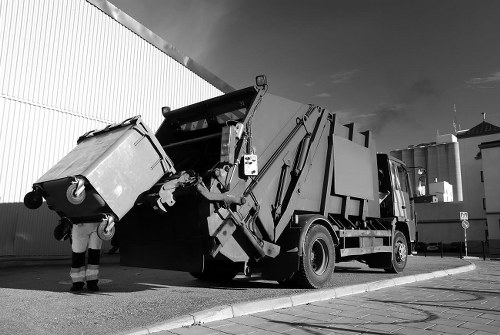
London properties come in many forms, and that variety shapes the way waste disposal needs to be handled. A one-size-fits-all approach rarely works well in the capital. A maisonette above a parade of shops in Hackney may need careful carrying and timed access. A mews house in Kensington may have restricted vehicle entry. A warehouse unit in East London might produce mixed commercial waste that needs sorting before removal. A restaurant in Soho may need a quick turnaround to avoid disruption to trade. A local service that understands these differences can respond more effectively than a generic clearance option.
For residential customers, waste disposal often starts with an overflowing loft, garage, basement, shed, spare room, or garden. In flats and apartments, it may be old furniture, broken appliances, or bagged rubbish that has become too much to fit into regular bins. For commercial customers, the needs can include office furniture, packaging, stockroom clutter, refurbishment waste, or periodic clear-outs after a change in layout. In both cases, the value of a local London team is simple: they can assess the access, estimate the volume, and remove waste in a way that is practical for the property and the neighbourhood.
Another major benefit is flexibility. Londoners often need rubbish removed around school runs, delivery windows, tenant changeovers, end-of-lease deadlines, or contractors arriving on site. A dependable waste clearance service can work around those schedules more easily than you might expect, especially when the team is used to city logistics. If you are trying to avoid long delays or repeated handling, local support can make a real difference.
What Waste Disposal Can Include
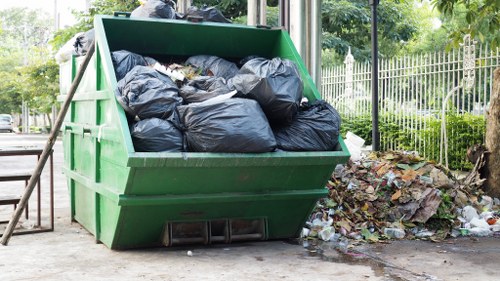
Professional waste disposal in London can cover a broad range of items, and it is helpful to know what can usually be taken away in one appointment. Most customers want one simple visit that clears as much as possible without needing to separate everything themselves beforehand. Depending on the service and the materials involved, this may include general household rubbish, old furniture, worn-out mattresses, broken cabinets, white goods, office desks, shelving, cardboard, and mixed junk from decluttering or moving.
Many customers also need help with bulky waste removal, especially when items are too large for normal disposal routes. Sofas, wardrobes, tables, beds, filing cabinets, and exercise equipment can be difficult to move through narrow stairwells or down shared hallways. In London flats, especially those in older buildings, the challenge is often not just the item itself but the route out of the property. A trained team can manage lifting, carrying, and loading in a way that reduces damage and saves you from trying to organise several people just to move one item.
Depending on the job, waste disposal may also include garden waste, renovation debris, or light builder’s waste. That could mean bags of soil, branches, hedge trimmings, timber offcuts, tiles, bathroom rip-outs, kitchen units, plasterboard, and packaging from new fixtures. For businesses, it might involve retail waste, office clear-outs, display units, archive materials, and unwanted furniture after a refit. If you are unsure whether a particular item or mix of waste can be taken, it is usually best to ask before booking so the service can be planned correctly.
How the Service Usually Works

Most customers want a process that is quick and easy to understand. A good London waste disposal service typically starts with an enquiry or booking request, where you describe what needs removing, where the property is located, and any access issues that matter. This is especially useful in London because parking restrictions, stair access, lift availability, and loading rules can affect how long the job takes and what vehicle or team size is needed. The more accurate the details, the smoother the collection is likely to be.
On arrival, the team will normally assess the waste, confirm the work required, and handle the lifting and removal. In many cases, customers prefer a same-day or next-day option, particularly for urgent clearances, end-of-tenancy situations, or business premises that need to be ready for use. Once the waste is loaded, the area is left tidier so that you can continue with whatever comes next, whether that is cleaning, decorating, repairs, or handing the property back to a landlord, client, or buyer. This is one of the main reasons local waste removal is so popular in London: it removes the heavy work from your day.
Some jobs are straightforward, while others need a bit more planning. For example, a basement clearance in Brixton may require careful carrying up stairs, while a period property in Islington may involve narrow entrances and shared access areas. A shop clearance in Croydon or a studio office in Shoreditch may need off-peak timing to minimise disruption. A reliable local team will take those details into account rather than treating every collection as if it were the same.
Why London Properties Need a Different Approach

London’s layout creates disposal challenges that are easy to underestimate until you are trying to move something large or heavy. Many homes are in converted buildings, mansion blocks, terraces, purpose-built flats, or mixed-use premises where access is limited. Parking can be tight, permits may be needed, and loading bays are not always available exactly when you want them. Even if the waste itself is manageable, getting it to the vehicle can be the hardest part of the job.
For this reason, a local waste disposal company is often better positioned to help than a service unfamiliar with the city. Local teams understand neighbourhood restrictions, busy traffic patterns, low-emission or restricted access areas, and the realities of working around other residents and businesses. If you live near central areas like Westminster, Marylebone, Holborn, and Waterloo, or in busier outer districts such as Wembley, Woolwich, Greenwich, Ealing, or Lewisham, the collection needs can vary a lot from one street to the next. A team with London experience will be used to adapting to those differences.
That local awareness also helps reduce stress for the customer. When you know the team understands your type of property and the likely access issues, you can plan around the collection with more confidence. That is particularly helpful during moves, refurbishments, office relocations, and landlord handovers where timing matters. In many cases, being able to clear waste promptly means you can keep the rest of the project moving without unnecessary delay.
Residential Waste Disposal for Flats, Houses, and Shared Buildings

Residential customers in London often need waste disposal for very practical reasons. A spare room may have become storage. A loft may be full of old boxes. A garden may have accumulated broken fencing, plants, and general clutter. A house move may have uncovered items that no longer fit the new home. In rented properties, end-of-tenancy deadlines can create pressure to clear leftover items quickly so the property can be cleaned and handed back on time.
Flats and apartments present a different challenge. Communal hallways, lift restrictions, and stair access can make it hard to shift bulky items without help. Old furniture, appliance replacements, and bagged rubbish are common requests in places like Clapham, Canary Wharf, Hammersmith, Peckham, and Finsbury Park, where residents often need quick and tidy removal without disturbing neighbours. A respectful local team will work carefully through shared spaces and aim to keep disruption low.
Homeowners also use waste disposal services after DIY projects. A new bathroom, kitchen, or flooring job can leave a surprising amount of debris behind, even if the main work was small. Rather than filling a car boot several times or waiting for the waste to build up, many customers prefer one organised removal that clears the site in a single visit. That is often the simplest way to get a home back to normal.
Commercial Waste Disposal Across London
Offices, Shops, Hospitality, and Light Industrial Sites
Commercial waste disposal in London needs to be efficient, discreet, and arranged with the daily running of the business in mind. Offices may need old desks, chairs, partitions, monitors, packaging, archive boxes, and general clutter removed after a move, refit, or change in workflow. Retail units may need display fixtures, shelving, stockroom waste, and packaging cleared out before reopening. Hospitality businesses often require quick removals between shifts or during scheduled refurbishment periods.
For many businesses, what matters most is speed and reliability. Lost time can affect staff productivity, trading conditions, customer flow, and contractor schedules. A local London waste disposal service that can work to an agreed time window is particularly useful for busy commercial areas such as the City, Canary Wharf, Southbank, Kensington High Street, and parts of North and East London where access and timing need to be coordinated carefully. The goal is to clear the waste while letting the business keep operating as smoothly as possible.
Light industrial customers may also need help with mixed waste from refurbishments, storage clean-outs, or equipment replacement. In these settings, clear communication matters because waste can be bulky, varied, or spread across several rooms or floors. It is always best to describe the site in detail so the removal team can prepare appropriately and avoid last-minute issues on the day.
Common commercial items removed
- Office furniture and meeting room equipment
- Shop fittings, shelving, and display units
- Cardboard, packaging, and stockroom clutter
- Archive materials and general office junk
- Furniture and soft furnishings from hospitality premises
- Light refurbishment waste and mixed rubbish
What Is Included in a Typical Collection
Clear Removal, Loading, and Responsible Handling
When customers arrange waste disposal in London, they usually want more than a vehicle turning up. They want the lifting, carrying, and loading handled properly, especially if the items are heavy or awkward. In many jobs, the main value of the service is that you do not have to move items yourself, borrow a van, or ask friends and neighbours to help. That is a major advantage for people living alone, busy families, landlords, and business owners who simply do not have the spare time.
A standard collection may include the removal of items from inside the property, from a garden, basement, loft, garage, office floor, or loading area, depending on access and the agreement made at booking. The team will usually sort the waste into what can be removed efficiently and what may need extra care. If your property is in a conservation area, on a busy road, or in a block with strict management rules, those details should be shared early so the job can be planned around them.
It is also common for customers to want the site left as neat as possible after the collection. While a waste removal service is not the same as a full deep clean, a good team will tidy up loose debris and leave the area ready for the next stage of work. That could mean a decorator arriving later in the day, a landlord inspection, a sale completion, or simply a cleaner room at home.
Typical situations where this helps most
- End-of-tenancy clearances
- House moves and downsizing
- Loft, garage, and shed clear-outs
- Shop closures and office relocations
- Post-renovation rubbish removal
- Garden and outdoor space tidy-ups
Pricing Factors Customers Should Know About
What Can Affect the Cost of Waste Disposal in London
Customers often want a clear idea of what affects waste disposal pricing before they book. While exact prices depend on the job, the main factors are usually easy to understand. The volume of waste is one of the biggest considerations, because a small load of bagged rubbish is very different from a full property clearance. Item type matters too, since heavy furniture, mixed materials, and difficult-to-handle objects can take longer to remove.
Access is another major factor in London. A ground-floor flat with easy parking will usually be simpler than a third-floor apartment with no lift and a long walk from the nearest loading point. Similarly, a property on a narrow street with restricted parking may require additional planning. Some jobs also involve more sorting, carrying, or time on site, especially if waste is spread across several rooms or includes awkward items.
Other factors may include the location within London, the urgency of the collection, and whether the waste includes mixed materials from renovation or commercial activity. If you want the most accurate quote, it helps to be honest about what needs removing and share photos if requested. That allows the team to estimate the work fairly and avoid surprises once they arrive.
Request a free quote when you are ready to compare the likely scope of the job and arrange a convenient time.
How to Prepare for Your Collection
A Simple Checklist for London Customers
Preparing for a waste disposal visit does not need to be complicated, but a little organisation can make the appointment faster and easier. If you know the waste is coming from a difficult-to-reach area, think about whether doors, gates, or communal entry points need to be unlocked in advance. In flats, it can also help to check any building rules about service access, lift use, or loading times so that the collection runs smoothly.
If you have items you want to keep, it is worth separating them clearly before the team arrives. This is especially important in shared spaces, lofts, garages, or storage cupboards where similar items can be mixed together. Some customers prefer to label what should stay and what should go, while others move valuables or personal paperwork into a separate room. The aim is to avoid confusion and make the collection efficient from the start.
You may also want to clear a path to larger items, especially if furniture or appliances are in tight rooms or behind other belongings. Even a small amount of preparation can save time. For household or business customers alike, the smoother the access, the more straightforward the removal usually becomes.
Preparation checklist
- Identify the items to be removed.
- Separate anything you want to keep.
- Check access, parking, and building rules.
- Move obstacles if it is safe to do so.
- Tell the team about fragile items or awkward staircases.
- Be available for any final questions on the day.
Why Choose a Local London Company
Practical Benefits That Matter on the Day
Choosing a local company for waste disposal in London is about more than geography. It is about getting help from people who understand the pace of the city and the small details that can make a big difference. A local team is more likely to know how busy certain roads become, where parking is limited, and how to approach different property types without wasting time. That kind of experience can help the collection feel more organised from start to finish.
Local knowledge also matters when jobs need to be scheduled around the realities of city life. If you are in a busy neighbourhood such as Battersea, Stratford, Brixton, Fulham, Greenwich, or Ealing, timing may need to fit around deliveries, residents, commuters, or business hours. A local provider can plan more realistically because they are used to these conditions. For customers, that means less uncertainty and a better chance of getting the job done when it suits the property and the occupants.
Another advantage is communication. When you deal with a local waste removal company, it is easier to describe access issues, ask the right questions, and clarify what is included. That can be particularly useful for landlords, letting agents, facilities managers, homeowners, and small businesses who need dependable support without unnecessary back-and-forth. In a city where time is valuable, a straightforward service is often the most appreciated one.
Areas Covered Across London
Waste disposal services can support customers across a wide range of London boroughs and neighbourhoods. Demand is common in central, north, south, east, and west London because every area has its own mix of homes, offices, and commercial premises. Whether you are in a compact flat, a terraced house, a converted building, or a large workplace, the service can usually be arranged to fit the property type and access conditions.
Typical areas where customers request rubbish removal include, but are not limited to, central districts and nearby business zones, plus residential neighbourhoods such as Camden, Islington, Westminster, Chelsea, Kensington, Hackney, Tower Hamlets, Southwark, Lambeth, Wandsworth, Hammersmith, Fulham, Brent, Haringey, Lewisham, Greenwich, Newham, Ealing, and Croydon. Outer areas and mixed-use zones across Greater London also benefit from local collection teams that know how to work around different roads, parking systems, and building layouts.
If you are based near a busy high street, in a gated development, on a narrow residential road, or in a commercial estate, it helps to mention that when you enquire. London’s variety is exactly why a flexible local service matters: it can adapt to the area rather than expecting the area to fit the service.
Frequently Asked Questions
Real Questions London Customers Often Ask
Do I need to sort everything before booking? Not usually. Many customers prefer a mixed waste collection where the team can remove a range of items at once. If your waste includes special materials or anything that needs separate handling, mention that in advance so it can be discussed clearly.
Can you collect from flats and upper floors? In many cases, yes. Flats, apartments, and multi-storey properties are very common in London. The main thing is to explain the access, whether there is a lift, and whether parking or loading is limited. That helps the team plan the collection correctly.
What if I only have a few bulky items? That is still a common reason to arrange waste disposal. A sofa, mattress, wardrobe, or broken appliance can be hard to move and dispose of properly on your own. A removal service can be a practical choice even for a small number of large items.
Can businesses use the service regularly? Yes, many commercial customers need occasional clear-outs or repeat collections after refits, office changes, stock updates, or seasonal trading changes. If your business has recurring waste disposal needs, it helps to explain the pattern so the service can be tailored to suit.
How much notice do I need to give? That depends on availability and the type of job, but many customers in London ask for short-notice or same-day help when they need fast clearance. For larger or more complex jobs, booking earlier is usually the best option.
What should I do if I am not sure what counts as waste? Make a list or take photos of the items. That usually makes it easier to decide what can be collected and what details need to be checked beforehand. Being clear at the start helps avoid delays later.
When Waste Disposal Is the Right Choice
Signs It Is Time to Clear the Space
Sometimes the decision is obvious: you cannot get into a room, the rubbish is taking over a hallway, or a commercial space needs to be cleared for the next stage of work. Other times, the need builds slowly. You may notice that your storage area is full of things you do not use, or that a pile of unwanted items has become too much to handle in one go. In those moments, waste disposal is not just about getting rid of rubbish; it is about making the property easier to live in, work in, or hand over.
For families, the benefits can include more usable space, less clutter, and a safer home environment. For landlords and letting agents, it can mean faster turnaround between tenancies and a better-presented property. For businesses, it can support efficiency, cleaner work areas, and a more organised premises. In all cases, the service is about making life simpler in a city where space is limited and time is often tight.
If you are looking at a room, a garden, a shop floor, or an office and thinking that the waste is now more effort than it is worth, that is often the moment to act. A local team can help you take the next step without the strain of trying to manage the whole job alone. Contact us today to discuss your clearance and arrange a convenient collection.
Final Thoughts on Waste Disposal in London
A Practical Service for Busy Homes and Businesses
Waste Disposal in London is rarely just about rubbish. It is about access, timing, property type, and getting help from people who understand the city’s day-to-day realities. From family homes in suburban streets to apartment blocks, offices, and retail units in busier districts, customers need a service that can handle the work efficiently and respectfully. That is why local knowledge matters so much.
When you choose a local waste removal team, you are choosing a service that can respond to the constraints of London life: limited parking, narrow access, busy roads, shared entrances, and the need to keep disruption low. Whether your job is small or large, residential or commercial, planned or urgent, the right service makes disposal simpler and more manageable.
If you are ready to clear unwanted items, open up space, or arrange a one-off collection for your property or business, the next step is straightforward. Request a free quote or book your service now and get the waste cleared in a way that suits London living.