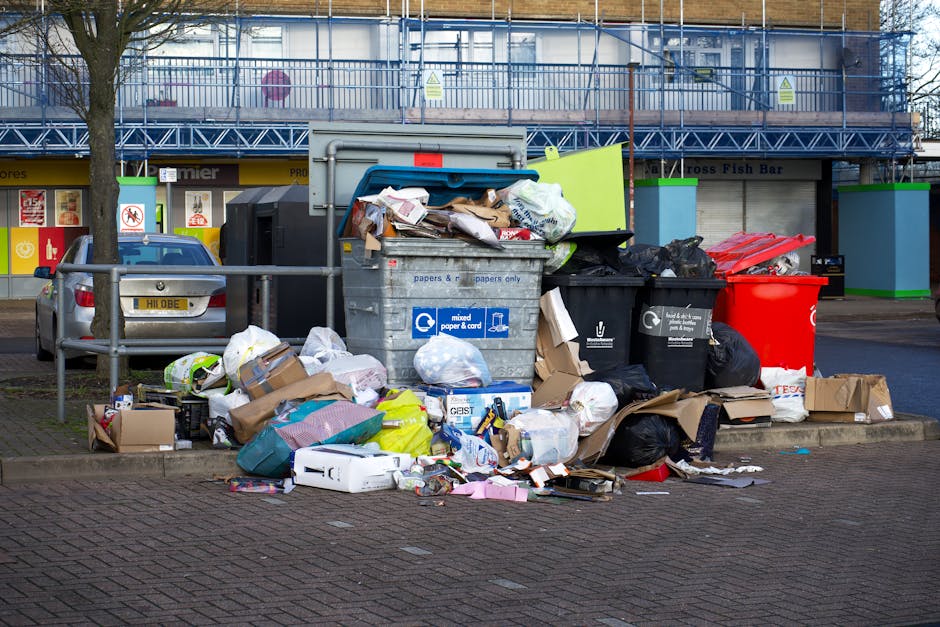
Hidden charges in London rubbish removal: what to avoid
Booking rubbish clearance should feel simple. You tell the company what needs moving, they give you a clear price, and the job gets done without drama. But anyone who has arranged a same-day collection in London knows it does not always play out like that. Hidden charges in London rubbish removal can creep in through vague quote wording, access fees, congestion add-ons, minimum-load rules, or a bill that suddenly changes once the van is outside your flat. Annoying? Absolutely. Avoidable? Mostly, yes.
This guide breaks down the common tricks, the honest warning signs, and the practical steps that help you compare rubbish removal services properly. If you are clearing a single sofa, a builder's load, or a full house, the goal is the same: know what to avoid before anyone lifts a wheelbarrow.
For peace of mind, it also helps to understand the provider's wider standards. Pages like pricing and quotes, terms and conditions, payment and security, and insurance and safety often tell you more than the headline price ever will.
Table of contents
- Why hidden charges matter in London rubbish removal
- How hidden charges usually show up
- Key benefits of spotting fees early
- Who this is for and when it makes sense
- Step-by-step guidance
- Expert tips for better results
- Common mistakes to avoid
- Tools, resources and recommendations
- Law, compliance and best practice
- Options, methods and comparison table
- Case study or real-world example
- Practical checklist
- Conclusion
- Frequently asked questions
Why hidden charges in London rubbish removal: what to avoid matters
London is not the easiest place to price a clearance job. Parking can be tight, access can be awkward, and loading time can vary wildly depending on whether you are on a ground-floor mews house or a fourth-floor flat with a narrow stairwell. That does not excuse surprise fees, but it does mean you need a sharper eye than you might for a simple online purchase.
Hidden charges matter because they distort the real cost of the job. A low headline quote can look tempting, yet the final invoice may include extras for stairs, long carries, heavy items, congestion, waiting time, fuel, card payments, or "additional waste" that was never clearly defined. By the time you notice, the van has gone and the awkward conversation has begun.
Truth be told, most bad experiences start small. A vague message saying "from GBP60" can seem fine at first. Then the crew arrives, looks at the pile, and the price doubles because the load is slightly bigger than imagined. Or the company insists the quote covered one man and not two, even though your old wardrobe was never going anywhere with one person and a prayer. That sort of thing.
Understanding the risk helps you compare providers on more than just price. It also encourages better planning, which is especially useful for house clearance, flat clearance, office clearance, or one-off junk clearance jobs where the details can get messy fast.
How hidden charges in London rubbish removal: what to avoid works
Hidden charges usually appear when the quote is incomplete, the job description is vague, or the business uses a pricing structure that sounds simple but has lots of small escape hatches. The trick is rarely dramatic. It is usually a sequence of tiny additions, each justified on its own. Together, they create the final number you were not expecting.
Common ways the price changes
- Access charges: extra fees for stairs, no lift, long walk distances, gated access, or awkward parking.
- Volume changes: the load is measured differently from how you described it, so the price "moves up a band".
- Weight surcharges: especially relevant for builder's waste, soil, rubble, or mixed heavy materials.
- Item-specific fees: mattresses, fridges, TVs, and bulky white goods sometimes carry disposal costs.
- Timing extras: evening, weekend, or same-day collection add-ons that were not made obvious.
- Payment extras: card fees, administration fees, or minimum spend rules.
In a well-run quote, these issues are dealt with in advance. A good operator will ask questions about what is being removed, where it is located, whether parking is possible, and whether the waste includes special items. That is a good sign, not a nuisance. It means they are trying to avoid the awkward "oh, by the way..." moment on arrival.
For specific bulky items, it helps to check the service page that matches the job. A sofa, for example, may be handled differently from mixed rubbish or a white goods collection. Useful starting points include sofa removal, mattress disposal, fridge disposal, and white goods recycle.
Key benefits and practical advantages
Being alert to hidden charges does more than save money. It improves the whole process. You get fewer surprises, a cleaner comparison between providers, and a better sense of who is actually organised.
- Clearer budgeting: you know what the job should cost before anyone arrives.
- Better comparisons: you can compare like-for-like quotes instead of guesswork.
- Less stress on the day: no one likes negotiating in the hallway with a pile of rubbish behind them.
- Faster booking decisions: once the pricing is clear, the rest is straightforward.
- Better service quality: transparent operators tend to be more disciplined elsewhere too.
There is a quieter benefit as well. When the quote is properly explained, you are less likely to over-order the service or under-plan the clearance. That matters with larger jobs such as builders waste clearance, garden waste clearance, loft clearance, or probate house clearance, where timing and access can be just as important as the pile itself.
Expert summary: the cheapest rubbish removal quote is not always the cheapest job. A genuinely good price is one that stays put, is easy to understand, and matches the work you actually need done.
Who this is for and when it makes sense
This topic matters if you are arranging any sort of rubbish removal in London and do not want a surprise invoice landing after the van has left. That includes homeowners, tenants, landlords, estate managers, small businesses, and people handling a difficult clear-out for family reasons.
You will especially want to watch for hidden charges if:
- you live in a flat with stairs or limited lift access;
- the waste is spread across several rooms or floors;
- the job includes heavy or awkward items;
- the waste is mixed, not neatly stacked;
- parking outside is difficult or restricted;
- you need a same-day or short-notice collection;
- you are comparing online quotes that feel a bit too good to be true.
It also makes sense if you are not sure whether to use a private clearance company or a council service. For larger household items, a council option may be appropriate in some cases, which is why pages like council large item collection, council rubbish collection, and council waste collection can be worth checking before you decide.
Step-by-step guidance
If you want to avoid hidden charges, do the pricing work before the clearance day rather than during it. That is where most people go wrong. A rushed quote can be fine for a very small job, but for anything more involved, follow a simple process.
- List exactly what is being removed. Write down the item types, rough quantities, and whether anything is especially heavy, fragile, or awkward.
- Check access honestly. Mention stairs, lifts, parking issues, loading distance, basement storage, or any restricted entry points.
- Ask what the quote includes. Labour, loading, disposal, VAT if applicable, parking, and timing should all be clear.
- Ask what would change the price. You want the triggers, not vague reassurance.
- Request the quote in writing. Even a simple email is better than a memory-based agreement.
- Confirm payment terms. Make sure you know when payment is due and what methods are accepted.
- Read the fine print. A minute with the terms can save an unpleasant five-minute argument later.
For mixed or larger clearances, it helps to separate the waste into categories before you call. For example, a furniture clearance might be quoted differently from rubbish clearance or waste clearance. That sounds obvious, but people often forget one bulky item tucked behind a door and then wonder why the quote changed. Happens all the time.
A practical example of a better quote request
Instead of saying, "I've got some rubbish to take away," say, "I have one three-seater sofa, one mattress, a disassembled desk, and about six black bags of mixed household waste. It is a second-floor flat with stairs and no direct parking outside." That gives a provider enough detail to price the job properly. It also makes it much harder for surprise fees to creep in later.
Expert tips for better results
A few small habits make a big difference here. Nothing fancy. Just practical discipline.
- Take photos before you book. A quick set of pictures can reduce misunderstanding and create a more accurate estimate.
- Ask about "all-in" pricing. Not every company uses it, but if they do, it should be clearly defined.
- Separate special items. Mattresses, fridges, and electricals can affect the quote, so flag them early.
- Be precise about quantity. "Half a van" and "a few bits" are slippery phrases. Try to be more exact.
- Check whether the job is priced by volume or by load type. Some operators use cubic yard bands; others use van fractions or item counts.
- Confirm whether labour time is capped. If the crew needs extra time because access is awkward, ask how that is handled.
Another useful habit is to ask whether the company handles recycling and disposal responsibly. That is not just a feel-good extra. It can tell you whether the provider is organised. Pages such as recycling and sustainability, waste recycling, and recycling and rubbish may give you a sense of how they think about waste beyond the pickup itself.
And yes, ask questions. A good company will not act offended because you want clarity. If anything, they should welcome it. Anyone who gets shifty when you ask about fees? That is a warning light, plain and simple.
Common mistakes to avoid
Most hidden-charge problems happen because the customer makes a reasonable assumption that turns out to be wrong. That is not the same as being careless. It just means the pricing was not explained well enough.
- Choosing only on headline price. The lowest number often hides the most conditions.
- Leaving access details out. Stairs and parking matter a lot in London.
- Assuming all items are priced the same. A wardrobe, mattress, and fridge are not identical jobs.
- Not asking about minimum charges. Small jobs can still have a minimum call-out or load fee.
- Ignoring the terms and conditions. A few minutes here can prevent an expensive misunderstanding.
- Booking in a rush without photos or measurements. That is when the quote gets fuzzy.
There is also a quieter mistake: not checking whether the service you need is actually the right one. For example, a bulky waste collection may suit large household items, while business waste removal or commercial waste collection is more appropriate for offices and shops. Using the wrong service can lead to confusion, delays, and yep, price changes.
Another common slip: forgetting to mention a fridge in among the "general rubbish". Appliances can require different handling. If you need to dispose of a fridge, say so up front. It saves a lot of awkwardness.
Tools, resources and recommendations
You do not need a toolbox to deal with hidden charges, but you do need a few practical tools and habits.
- Phone camera: take wide shots of the waste and access route.
- Notes app or simple checklist: record item counts, room locations, and special instructions.
- Measuring tape: useful for bulky items, door widths, or a tight stair turn.
- Email: keep the quote trail in writing.
- Calendar reminder: note the agreed arrival window and any parking arrangements.
Within the website, these pages are especially useful for confidence and planning: pricing and quotes, terms and conditions, insurance and safety, and health and safety policy. They are the sort of pages people skip when they are in a hurry, then regret it later. Not glamorous, but useful.
If your job is tied to a specific item or setting, these service pages may help narrow the scope: furniture disposal, bed disposal, mattress removal and collection, garage clearance, and loft clearance.
Law, compliance and best practice
When rubbish removal involves regulated waste, electrical items, bulky appliances, or commercial material, compliance starts to matter. You do not need to become a waste expert overnight, but you should expect the company to behave like one.
Good practice usually means clear communication, appropriate handling of waste types, sensible disposal routes, proper insurance, and honest pricing. If a provider is vague about where your waste goes, whether items are recycled where appropriate, or how complaints are handled, that is not ideal. It may not always mean wrongdoing, but it is not the standard you want.
For business customers, the bar is often higher because the waste stream can be mixed, confidential, or time-sensitive. In those cases, pages like business waste removal, commercial waste disposal, and office clearances are especially relevant. For household jobs, the principle is the same: know what you are paying for and who is responsible for what.
Best practice also includes fair complaints handling. If a company offers a clear complaints process, that is a reassuring sign. So is visible information about safety, payments, and customer rights. It sounds basic, but honestly, the basics are where trust begins.
Options, methods and comparison table
When you are trying to avoid hidden charges, you are not just choosing a provider. You are choosing a pricing style. Here is a simple comparison of common approaches.
| Pricing method | What it means | Pros | Watch out for |
|---|---|---|---|
| Fixed quote | Price agreed in advance for a clearly described job | Easy to budget; fewer surprises | Needs accurate job details |
| Load-based pricing | Price depends on how much van space the waste takes | Flexible for mixed loads | Can change if your estimate is off |
| Item-by-item pricing | Each item is priced separately | Good for a few bulky items | Extra items can increase cost fast |
| Call-out plus extras | Base fee with add-ons for access, timing, or special items | Can suit complicated jobs | Easy for extras to stack up |
If you want the least drama, a properly explained fixed quote is often the easiest option. But it only works well when the job is described honestly. If the pile is bigger than you first said, the quote may change for a fair reason. That is not a hidden charge; that is a correction. The difference matters.
For very large or mixed jobs, compare the quote against the likely alternatives, such as bulk waste collection or waste removal. Sometimes one approach is simply better suited to the load, and the pricing makes more sense once you match service to job.
Case study or real-world example
A typical London scenario goes like this. A tenant in a second-floor flat wants a fast clearance before move-out day. They say they need "a sofa, a mattress, and some rubbish". The first quote sounds fine. On the day, the crew finds no lift, tight stairs, a long carry to the van, and a hidden pile of extra items in a cupboard. The final cost rises. Nobody is thrilled.
Now compare that with a better approach. The tenant sends photos, notes the flat is walk-up only, lists the sofa, mattress, three bags of mixed waste, and a broken bedside table, and confirms there is no parking outside. The company quotes more accurately, explains any access or item-specific charges in advance, and the collection is done without a bill shock at the end. Same job, very different experience.
We have seen smaller jobs go the same way. A garage clearance looks cheap until people remember the old tiles, paint tins, and a heavy freezer tucked behind the bikes. Then the quote shifts. The surprise was not the waste; it was the missing information. That is the whole game, really.
Practical checklist
Use this before you accept any rubbish removal quote in London.
- Do I know exactly what is being removed?
- Have I mentioned stairs, lifts, parking, and carry distance?
- Did I ask whether the price includes labour, disposal, and taxes or fees?
- Have I flagged mattresses, fridges, or other special items?
- Is the quote written down somewhere?
- Do I know what would trigger an extra charge?
- Have I checked the terms and conditions?
- Do I understand when payment is due?
- Have I compared the quote with at least one alternative?
- Does the company seem clear, calm, and transparent rather than slippery?
If you can tick most of those boxes, you are in a much better position than most people who book in a rush on a busy Tuesday afternoon with a cup of tea going cold beside them. And yes, that happens.
Conclusion
Hidden charges in London rubbish removal are usually avoidable if you slow down long enough to ask the right questions. The biggest risks are vague pricing, incomplete job descriptions, and poor communication about access or special items. Once you understand those pressure points, the rest becomes far easier to control.
The practical move is simple: describe the job properly, get the quote in writing, check the terms, and choose transparency over a shiny low number. That is what protects your budget and your sanity. To be fair, both matter.
If you are comparing services, it also helps to look beyond price and check the company's wider standards, from about us and recycling and sustainability to complaints procedure and contact us. That wider picture tells you a lot.
Get a free quote today and see how much you can save.
Frequently asked questions
What are the most common hidden charges in London rubbish removal?
The most common extras are access fees, stair charges, long carry fees, congestion or parking-related costs, weekend surcharges, and item-specific disposal fees for things like fridges or mattresses.
How can I tell if a rubbish removal quote is honest?
An honest quote is specific. It explains what is included, what might change the price, and how the company handles access, special items, and payment. Vague "from" prices need more scrutiny.
Should I send photos before booking a clearance?
Yes, if you can. Photos help the provider judge volume, access, and item type more accurately, which reduces the chance of surprise charges later.
Why do some companies charge more for stairs?
Stairs can slow down loading and increase labour time, especially in London flats with narrow landings or no lift. That does not mean every company should charge the same way, but it is a common pricing factor.
Are mattress and fridge disposal usually extra?
They often are, because these items can require different handling and disposal routes. It is best to mention them early so they are included properly in the quote.
Is the cheapest rubbish removal company always the worst choice?
Not always, but very low quotes sometimes hide missing details. The real question is whether the price is clear and sustainable, not just low at the front end.
What should a good rubbish removal company explain before arrival?
They should explain the total expected price, what it includes, any likely extras, the arrival window, payment method, and anything they need from you on the day.
Can hidden charges appear after the job is done?
They can, especially if the quote was unclear or the provider claims the job changed after arrival. That is why written confirmation matters.
Do council collections have hidden charges too?
Council services tend to be more structured, but they can still have specific rules, item limits, and booking conditions. It is worth checking the service details before relying on them.
What if the company changes the price when they arrive?
Ask them to explain the change clearly before agreeing. If the reason is genuinely based on access, volume, or item type, it should match the information you gave. If not, you are right to push back.
Is it worth reading the terms and conditions?
Yes, absolutely. It is the quickest way to see how the business handles extras, cancellations, payment, and complaints. Not thrilling reading, granted, but useful.
What is the safest way to avoid surprise fees?
Be specific, send photos, confirm access, ask what triggers an extra charge, and get the quote in writing. That combination solves most problems before they start.